


La digitalización solo es verdadera transformación si no deja a nadie atrás. En el caso de Castilla y León, muchas personas mayores viven en entornos rurales y tienen cada vez más contacto con herramientas digitales. Sin embargo, se enfrentan a barreras importantes: textos difíciles de leer, interfaces confusas, formularios ininteligibles o plataformas que no se adaptan a sus necesidades.
Diseñar webs y servicios digitales accesibles e inclusivos se convierte en una cuestión de responsabilidad social y también en una ventaja competitiva para cualquier pyme o institución que quiera conectar mejor con su comunidad.
¿Por qué es clave la accesibilidad digital en el medio rural?
La accesibilidad digital, a parte de una cuestión técnica, es una necesidad urgente en territorios como Castilla y León, donde la población envejecida convive con una digitalización creciente. Entender sus hábitos y necesidades es el primer paso para construir servicios que realmente funcionen para todos.
En Castilla y León, la población mayor de 65 años representa más del 25 % en muchos municipios.
Las personas mayores son usuarias cada vez más frecuentes de servicios online: citas médicas, compras, bancos, gestiones administrativas o consultas sobre servicios turísticos o productos locales.
Una web accesible genera más confianza y fidelidad, y amplía el alcance del negocio.
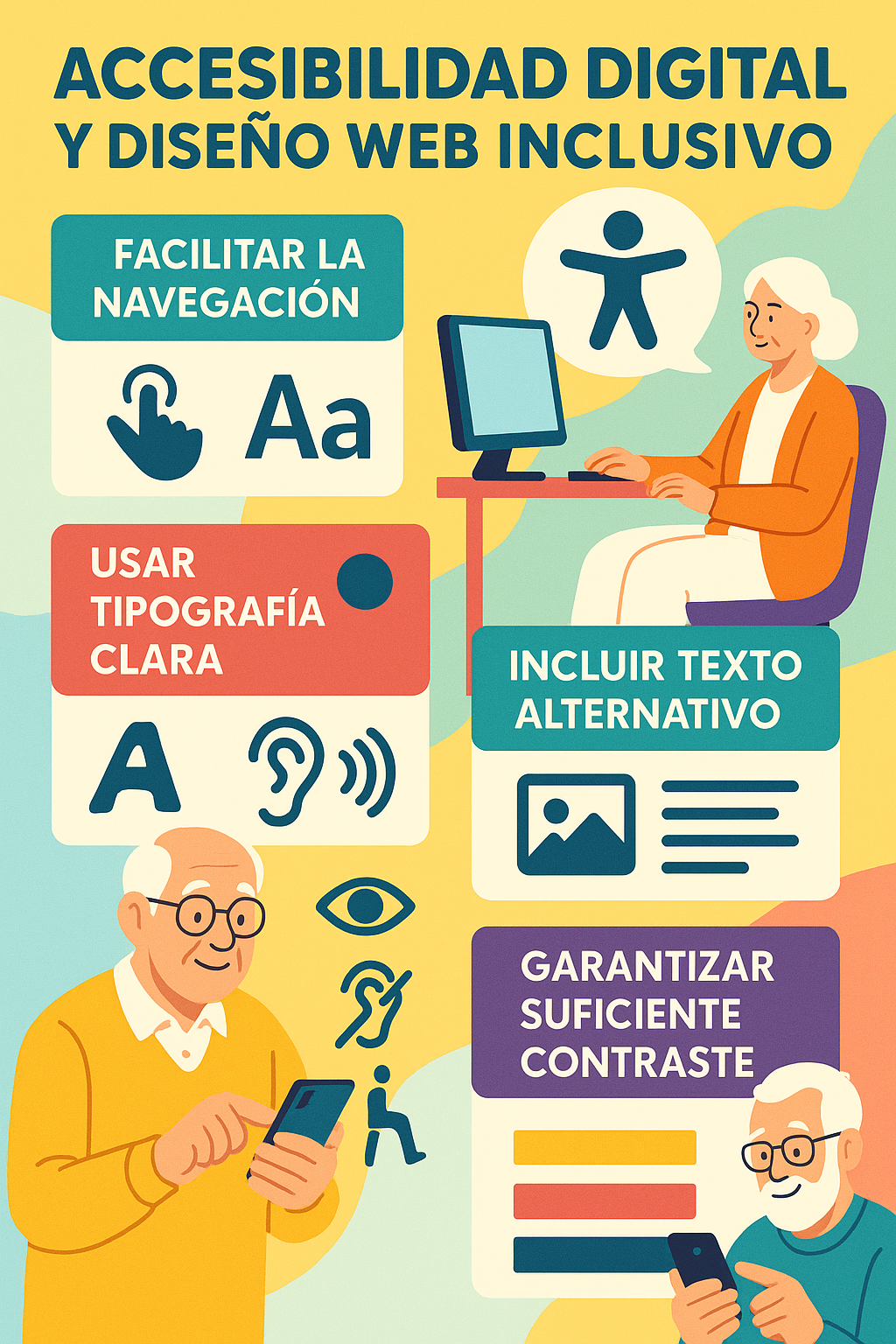
Buenas prácticas para diseñar sitios inclusivos:
La inclusión comienza en los detalles. Aplicar buenas prácticas de diseño accesible no requiere grandes inversiones, pero sí una mirada empática y funcional. Estas pautas ayudan a que cualquier persona, sin importar su edad o habilidades digitales, pueda navegar con facilidad, algunas de ellas pueden ser:
Textos claros y con tamaño adaptable.
Contrastes altos entre fondo y letras.
Menús simples y navegación intuitiva.
Compatibilidad con lectores de pantalla.
Evitar tecnicismos innecesarios.
Diseño responsive, que funcione en móviles y tabletas.
Ejemplos aplicables:
Ya hay iniciativas que lo demuestran. Estos ejemplos muestran cómo pequeños ajustes pueden marcar una gran diferencia en la experiencia de usuario:
Una tienda rural online que vende productos artesanos y adapta su proceso de compra con pasos simples y botones grandes.
Un alojamiento rural que permite reservas sin necesidad de crear cuenta ni introducir demasiados datos.
Una cooperativa que ofrece documentación descargable con tipografías legibles y guía de uso paso a paso.
La accesibilidad no es un añadido, es parte del diseño desde el inicio. Una web inclusiva no solo mejora la experiencia de los mayores, beneficia a todos.
Consulta con nosotros en info@digis3.eu y camina hacia una digitalización inclusiva y accesible.