


The Designation of Origin guarantees origin and quality, but the value chain (the set of activities, processes, and actors involved in the production, transformation, distribution, and marketing of the product) of a wine, cheese, or olive oil can span hundreds of kilometers, dozens of operators, and several countries. Along this journey, cracks open for counterfeiting: in 2025 alone, fraudulent alcoholic beverages cost Spain €380 million and 1,100 lost jobs.
Why Blockchain?
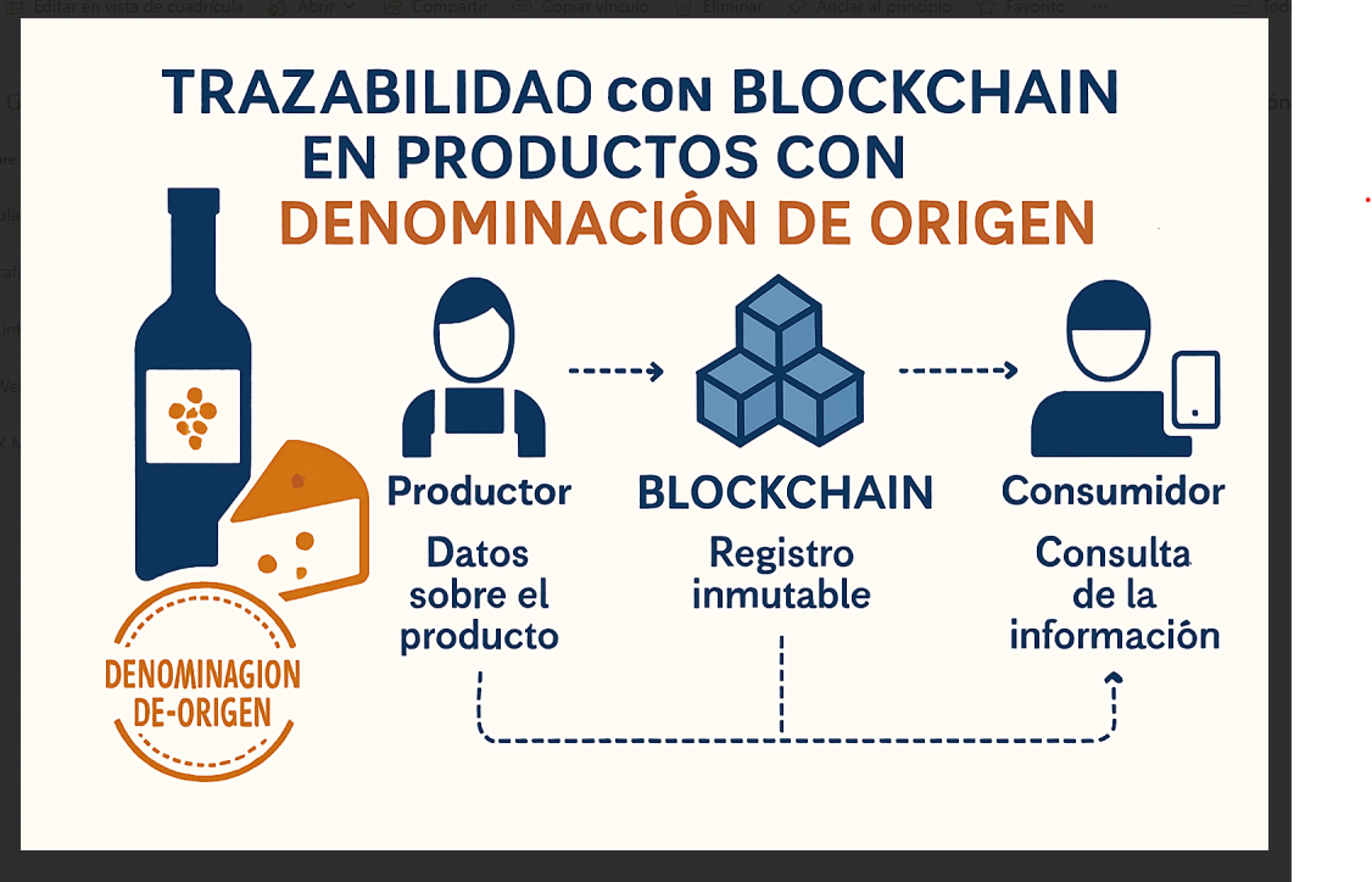
Blockchain technology emerges as an innovative solution to strengthen traceability in products with Designation of Origin. Its ability to record data immutably, transparently, and accessibly allows producers and consumers to fully trust the product’s journey from origin to point of sale. Moreover, it aligns with new European regulations, such as the Digital Product Passport, which demand greater control and digitization in the supply chain.
- Immutability: each batch is recorded in encrypted blocks, impossible to alter without leaving a trace.
- 24/7 Transparency: consumers scan a QR code and see the full story “from vine to glass.”
- Regulatory Compliance: aligns with the Digital Product Passport required by the EU starting from 2024–26.
Current Challenges for D.O.
Despite the benefits offered by the Designation of Origin, protected products face significant challenges in traceability and authenticity. From food fraud to the complexity of meeting international requirements, D.O.s must adapt to an increasingly demanding environment. Process digitization and the use of emerging technologies are key to overcoming these obstacles.
| Challenge | Impact |
| Adulteration and fraud | Reputational damage, sanctions, and market loss. |
| Paper-based traceability | Audit costs and risk of human error. |
| Export requirements | Asian countries demand digital certificates at origin. |
Tangible Benefits
The implementation of blockchain in D.O. products is already showing concrete results. It improves consumer trust, reduces audit time and costs, and opens new business opportunities such as NFT labels or digital tourism. These benefits not only strengthen producers’ competitiveness but also position D.O.s as benchmarks of innovation and quality.
- +25% consumer trust after LOCALVINO project pilots.
- –30% audit time by digitizing HACCP records and certifications.
- New revenue: NFT labels for limited editions and digital wine tourism.
Notable Use Cases
Various initiatives in Spain and internationally are demonstrating how blockchain can transform traceability in D.O. products. From olive oil to wine, these experiences show how combining blockchain with IoT can certify critical processes and offer consumers a transparent and secure experience. Each case provides valuable insights for future implementations.
| Product | Platform | Result |
| Maestros de Hojiblanca Olive Oil (Deoleo) | IBM Food Trust | 4M bottles/year with individual QR and “from olive to table” traceability |
| DO Campo de Borja – LOCALVINO | Blockchain + IoT | Automatic certification of harvest, pressing, and bottling |
| Olive Oil Pilot (Sensors 2024) | IoT + BCT | Reduces counterfeiting and improves quality control |
Tools and Solutions
The tech ecosystem offers multiple tools to integrate blockchain into the traceability of D.O. products. From ready-to-use SaaS platforms to more flexible open-source solutions, producers can choose the option that best suits their needs. Additionally, certification standards facilitate interoperability and international recognition.
| Type | Examples | Notes |
| SaaS | IBM Food Trust, VeChain ToolChain | Global network, ready APIs. |
| Open Source | Hyperledger Fabric, Ethereum + ERC-721 | Flexibility, requires technical partner. |
| Certification | GS1 EPCIS, eCert DOP | Integrates GS1 codes and D.O. seals. |
How to Start from Your SME/Cooperative
Blockchain adoption isn’t reserved for large companies. SMEs and cooperatives can begin their digital transformation with simple, strategic steps. Identifying critical events, defining key data, choosing the right network, and running a pilot are actions that validate the technology before scaling. With the right approach, any producer can benefit from advanced traceability.
- Map critical events (harvest, analysis, dispatch).
- Define batch and minimum data (variety, plot, lab).
- Choose blockchain network: public (Ethereum) vs. permissioned (Fabric).
- Integrate QR/NFC into labeling.
- Run a 3–4 month pilot before scaling.
DIGIS3 Support
To facilitate technological transition, initiatives like DIGIS3 offer comprehensive support to SMEs. This section outlines some of the resources available for any agricultural company to incorporate blockchain with confidence.
- Free digital maturity assessment.
- “Test before invest” lab.
- Basic and advanced training.
- Funding advisory.
Contact info@digis3.eu to modernize your workshop and keep your machines running at full capacity.